Class 5 · A guide by AlloPermis

SAAQ Road Test: How to Prepare Well and Avoid Mistakes

Taking your road test in Québec soon? Find out what the examiner watches, the mistakes to avoid, the documents to bring and the best ways to prepare.

By AlloPermis, an SAAQ-recognized driving school · Updated

Our courses are taught in French, and we can guide you in English to register.

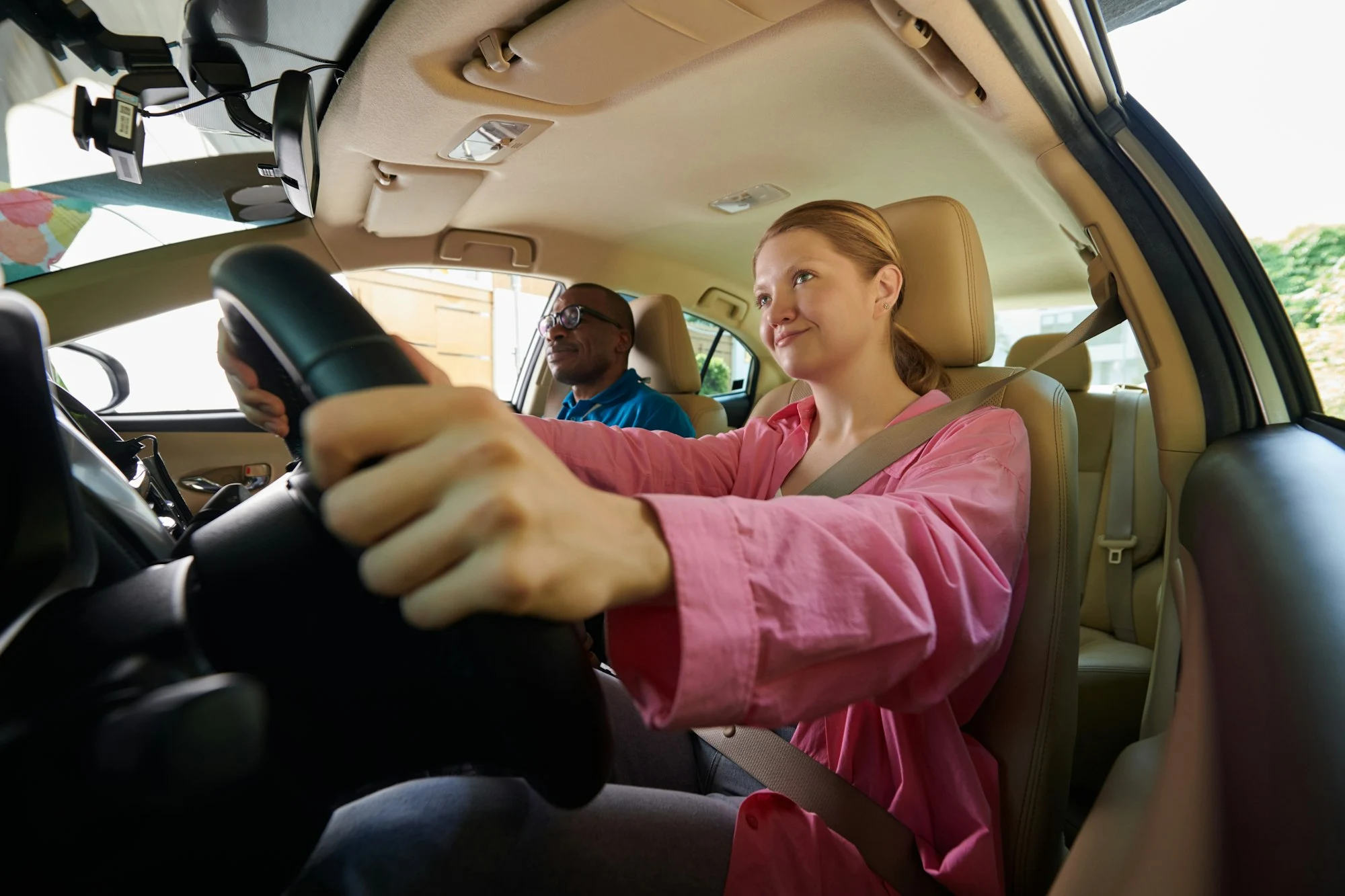
Candidate behind the wheel during her class 5 road test

The SAAQ road test in 60 seconds

The road test is the last big step before the class 5 probationary licence, in the usual path of a new driver. For about 30 minutes, an examiner watches your ability to drive in a safe, cooperative and responsible way.

Test length
~30 min
Allow about 1 hour for the whole appointment.
Passing mark
75%
The threshold the SAAQ states for the road test.
Test fee
$33.75
Plus $107.96 for the probationary licence (24 months) if you pass.
Vehicle
Bring your own
The SAAQ does not provide a car. A rental is accepted with the contract or receipt.

Source: SAAQ, information checked on October 8, 2026. Fees and rules may change: check saaq.gouv.qc.ca (in French).

Eligibility and booking

The requirements (usual path)

  • Hold a learner's licence for at least 12 months at the time of the test.
  • Have passed the SAAQ theory test.
  • Have passed a driving course at a school recognized by the SAAQ.

Have a licence from another country? The process is different: see our page on licence exchange.

Booking an appointment

You book online in the SAAQclic portal, where you choose your service centre.

Important : to cancel or reschedule, do it in SAAQclic at least 48 hours in advance. Otherwise, cancellation fees apply.

Open SAAQclic (official site) · Not comfortable with it yet? Read our SAAQclic portal guide.

Documents and vehicle: the checklist

If a document is missing or the vehicle doesn't meet the standards, the test won't take place and you'll have to book again. Tick items as you go (your ticks stay on this device), or print the list.

My SAAQ road test checklist · AlloPermis

Done: 0 / 0

Documents to bring
The vehicle (checked by the examiner)
On the day

A removable “Examen de conduite” sign, provided by the SAAQ, is placed on the vehicle during the test.

Need a car for your test?

The SAAQ does not provide a vehicle. AlloPermis offers a car rental service for the road test, subject to availability.

How does the road test go?

  1. Arrival and payment

    Go to the service centre you chose with your documents and pay for the test (cash, debit except at some service centres, pre-authorized debit or cheque; no credit card).

  2. Vehicle check

    The examiner checks the mechanical components (windows, lights, mirrors, brakes, tires, etc.). If the vehicle doesn't comply, the test does not take place.

  3. Instructions

    Before starting, the examiner explains how the test will go. No passengers or animals on board, no electronic devices.

  4. About 30 minutes of driving

    The examiner gives you the directions. You drive independently: observe, assess, act.

  5. Feedback

    Whether you pass or not, the examiner tells you your strengths and the points to improve.

Examiner seated beside a candidate at the wheel on road test day

What the SAAQ actually assesses

Here are the main elements assessed, as the SAAQ publishes them, and what they mean in practice behind the wheel.

Observe, assess, act: what the examiner watches Three circles linked by arrows in a loop: observe (mirrors, blind spots, scanning), assess (right-of-way, speed, space), act (at the right time, signalling). The SAAQ describes independent driving with these three steps. 1. Observe mirrors, blind spots, scanning 2. Assess right-of-way, speed, available space 3. Act at the right time, signalling … then start again, continuously Driving independently, as the SAAQ describes it
The SAAQ describes independent driving in three steps: observe, assess, act. It is the common thread of the whole assessment.
Main elements assessed on the SAAQ road test and what they mean in practice
Element assessedWhat the SAAQ saysWhat the examiner looks at in practice
Driving independentlyAnalyze the situation (observe), make the right decision (assess), perform the maneuver at the right time (act).You are given a direction, then you choose the lane, the timing and the speed. The examiner watches whether you decide on your own, without waiting to be guided.
Visual checksCheck over your shoulder when turning and changing lanes; scan your surroundings.The head movement must be visible and done at the right time, before you move. A quick look at the mirror does not replace the blind-spot check.
Vehicle controlControl your vehicle and speed; keep a proper position in the lane and a safe space from other road users.Smooth starts and stops, a steady path in the lane, enough distance behind the vehicle ahead.
Driving with confidence and courtesyDrive close to the permitted speed limits; use your right-of-way.Driving clearly too slowly or hesitating when it is your turn can also be noted. The goal: smooth, predictable and safe driving.
Following the rulesMake mandatory stops; drive at the legal speed; respect right-of-way.A full stop at the right place, the right speed for each zone (watch for limit changes), pedestrians and right-of-way respected.
Possible immediate failure : according to the SAAQ, some faults, such as missing a mandatory stop, driving over the speed limit or driving against the flow of traffic, can cause immediate failure. The SAAQ does not publish a specific speed threshold: the rule is the posted limit.
Why check over your shoulder Top view of two lanes. The mirrors cover an area behind the car, but a car in the blind spot, beside the rear, shows up in no mirror. Only a glance over your shoulder reveals it. Mirrors don't show everything Blind spot Glance over your shoulder Blue zone: visible in the mirrors Red zone: visible only by turning your head
The mirror doesn't show the blind spot. The glance over your shoulder, before every turn and lane change, is one of the checks assessed.

12 mistakes to avoid on the road test

Each mistake is shown as a real situation: what happens, and the right decision to make.

1. The “rolling stop” at a stop sign

Situation: The car slows down without coming to a complete stop.

The right reflex: A full stop, wheels not moving, at the right place, then observe before moving off. Missing a mandatory stop can mean immediate failure.

2. Going over the speed limit

Situation: A 50 km/h zone becomes 30 km/h and the driver didn't notice.

The right reflex: Watch the signs, especially where the zone changes. Driving over the limit can mean immediate failure.

3. Forgetting the blind spot

Situation: Changing lanes using only the mirrors.

The right reflex: Signal, mirror, then a glance over your shoulder, before every lane change and turn.

4. Driving too slowly for no reason

Situation: The candidate drives well below the limit out of excessive caution.

The right reflex: The SAAQ asks you to drive close to the permitted limits when conditions allow.

5. Hesitating to take your right-of-way

Situation: The candidate yields when it is their turn.

The right reflex: If it is your right-of-way and it is safe, take it clearly.

6. Not yielding

Situation: A pedestrian steps onto the crosswalk and the driver keeps going.

The right reflex: Respect right-of-way, especially for pedestrians at crosswalks.

7. Not scanning enough

Situation: Eyes stay fixed straight ahead when approaching an intersection.

The right reflex: Look left, right and far ahead, then check again before moving forward.

8. Poor lane position

Situation: A turn that is too wide, or a car drifting toward the line.

The right reflex: Keep a steady position in your lane, before, during and after the turn.

9. Following too closely

Situation: Little space ahead, frequent braking.

The right reflex: Keep a safe gap so you can react without braking hard.

10. Signalling too late, or not at all

Situation: The turn signal goes on at the very moment of the maneuver.

The right reflex: Signal early enough for other road users to understand your intention.

11. Braking hard for lack of anticipation

Situation: The driver discovers the obstacle at the last moment.

The right reflex: Look far ahead so you can slow down gradually.

12. Getting rattled after a mistake

Situation: After a small mistake, the candidate loses composure.

The right reflex: One mistake doesn't necessarily mean failure: success is judged on the whole test (75%). Breathe and get back to calm driving.

Coming soon

What our instructors observe

Our instructors will soon share what they see most often during preparation lessons: the common difficulties and the exercises that work. Section in the making.

Is your SAAQ test coming up?

Review the skills assessed with an AlloPermis instructor: observation, right-of-way, lane changes, parking and vehicle control. A mock test shows you exactly where you stand. Our courses are taught in French.

How to prepare over 7 days

A simple plan for the last week. It doesn't replace your training: it helps you focus on what the examiner watches.

  1. D-7

    Check eligibility, documents and the vehicle

    Use the checklist above. If the vehicle doesn't meet the standards, the test won't take place.

  2. D-6

    Observation

    Practise scanning and the over-the-shoulder check at every turn and lane change.

  3. D-5

    Intersections and right-of-way

    Full stops, right-of-way, pedestrians, traffic lights. Practise in varied areas.

  4. D-4

    Speed and position

    Keep to the limits without driving too slowly, lane position, distance from the vehicle ahead.

  5. D-3

    Common maneuvers

    Parking, turns, lane changes, hill starts. The SAAQ does not publish a fixed list of maneuvers: be comfortable with everyday situations.

  6. D-2

    Full mock test

    About 30 minutes of driving with an instructor who only gives you directions, as on test day.

  7. D-1

    Prepare without overloading

    Documents ready, vehicle checked, route to the service centre planned, someone to come with you. A good night's sleep.

On test day

  • Arrive early at the service centre you chose, with all your documents.
  • Leave your phone, watch and smart glasses aside: they are not allowed during the test.
  • Adjust your seat, mirrors and seatbelt before setting off.
  • Listen to the instructions, and ask the examiner to repeat a direction if you didn't understand it.

After the test: pass or fail

You passed

You pay the probationary licence fee ($107.96 for 24 months). The probationary licence is the next step before the class 5 driver's licence.

You didn't pass

The examiner tells you your strengths and the points to improve. Write them down, work on them, then book a new appointment in SAAQclic. The SAAQ recommends coming with someone so you can leave if you fail.

Work on my points to improve with an instructor

Newcomers : if you take the test with a foreign licence, the SAAQ states that if you fail, you will no longer be allowed to drive with that licence: a learner's licence, with conditions, will be issued to you.

Frequently asked questions about the SAAQ road test

What is the passing mark for the SAAQ road test?

The SAAQ states a passing mark of 75% for the road test.

How long does the road test last?

The test lasts about 30 minutes. The SAAQ recommends allowing about 1 hour for the whole appointment.

How much does the road test cost?

The road test costs $33.75. If you pass, the probationary licence costs $107.96 for 24 months (SAAQ fees checked in October 2026).

What documents do I need to bring?

Your learner's licence, the vehicle's valid and signed registration certificate, a paper copy of the liability insurance certificate and the driving course completion certificate (one per school attended).

Does the SAAQ provide a car for the test?

No. You must arrive with a safe vehicle in good mechanical condition. A rental car is accepted with the rental contract or receipt.

Can I keep my phone during the test?

No. You may not have any electronic device with you (phone, watch, smart glasses, camera, etc.) or film or record anything. Cheating means failure and a 90-day wait before retaking the test.

Which mistakes can cause immediate failure?

According to the SAAQ, some faults can cause immediate failure, for example missing a mandatory stop, driving over the speed limit or driving against the flow of traffic.

How do I cancel or reschedule my appointment?

Online, in SAAQclic, at least 48 hours in advance. Otherwise, cancellation fees apply.

What are the requirements to take the road test?

Holding a learner's licence for at least 12 months at the time of the test, having passed the SAAQ theory test and having passed a driving course at a school recognized by the SAAQ.

What happens if I fail?

Whether you pass or not, the examiner tells you your strengths and the points to improve. If you fail, you will need to book a new appointment in SAAQclic. The SAAQ recommends having someone with you on test day so you can leave if you fail.

Ready for test day?

AlloPermis, an SAAQ-recognized driving school in Montréal, supports you all the way to the test: preparation lessons, a mock test and a car rental for the big day. Our courses are taught in French, and we can guide you in English to register.

Official sources (in French, checked on October 8, 2026):

This guide is written by AlloPermis from information published by the SAAQ. It does not replace the official instructions or training with a qualified instructor. Fees and rules may change.